Anacostia: A History of Washington's First Suburb
Anacostia is a neighborhood in Southeast Washington, D.C., on the east bank of the Anacostia River around Martin Luther King Jr. Avenue and Good Hope Road SE. It began as the city's first planned suburb, became the home Frederick Douglass chose for the last years of his life, and grew into one of Washington's most important centers of African American history. This page is the short version; the timeline gives the dated outline, and the resources page lists the archives behind it.
A note on names: "Anacostia" here means the historic neighborhood and its historic district — not the whole of Ward 8 or everything "east of the river," and not the Anacostia River or riverfront park, which are separate things.
The river, the Nacotchtank, and a name
Long before the city, the east bank of the river was home to the Nacotchtank, an Algonquian-speaking people whom the English explorer John Smith documented in 1608.1 The neighborhood's name descends from their own: a Native word rendered roughly as Anaquashtanik — a town of traders — which Jesuit missionaries Latinized to "Anacostan," and which later attached to the river and the neighborhood.2
Uniontown: the city's first planned suburb
The neighborhood proper began in 1854, when a group of developers operating as the Union Land Association bought roughly 240 acres of farmland east of the river and laid it out as Uniontown — Washington's first planned suburb, marketed largely to workers at the nearby Washington Navy Yard.3 The subdivision was built on exclusion: the Association's deeds barred the sale or lease of property to people of African descent.4 Because so many other "Uniontowns" had sprung up around the country, Congress officially changed the name to Anacostia in 1886.5
The suburb was tied to the city by the river crossings. A wooden bridge at 11th Street SE, built in 1820, became a free bridge after the federal government bought it in 1848, giving the area its main link to the Navy Yard and the city.20 A streetcar line reached Uniontown across the Navy Yard Bridge in 1875, pulling the suburb into the city's daily orbit.19
Frederick Douglass at Cedar Hill
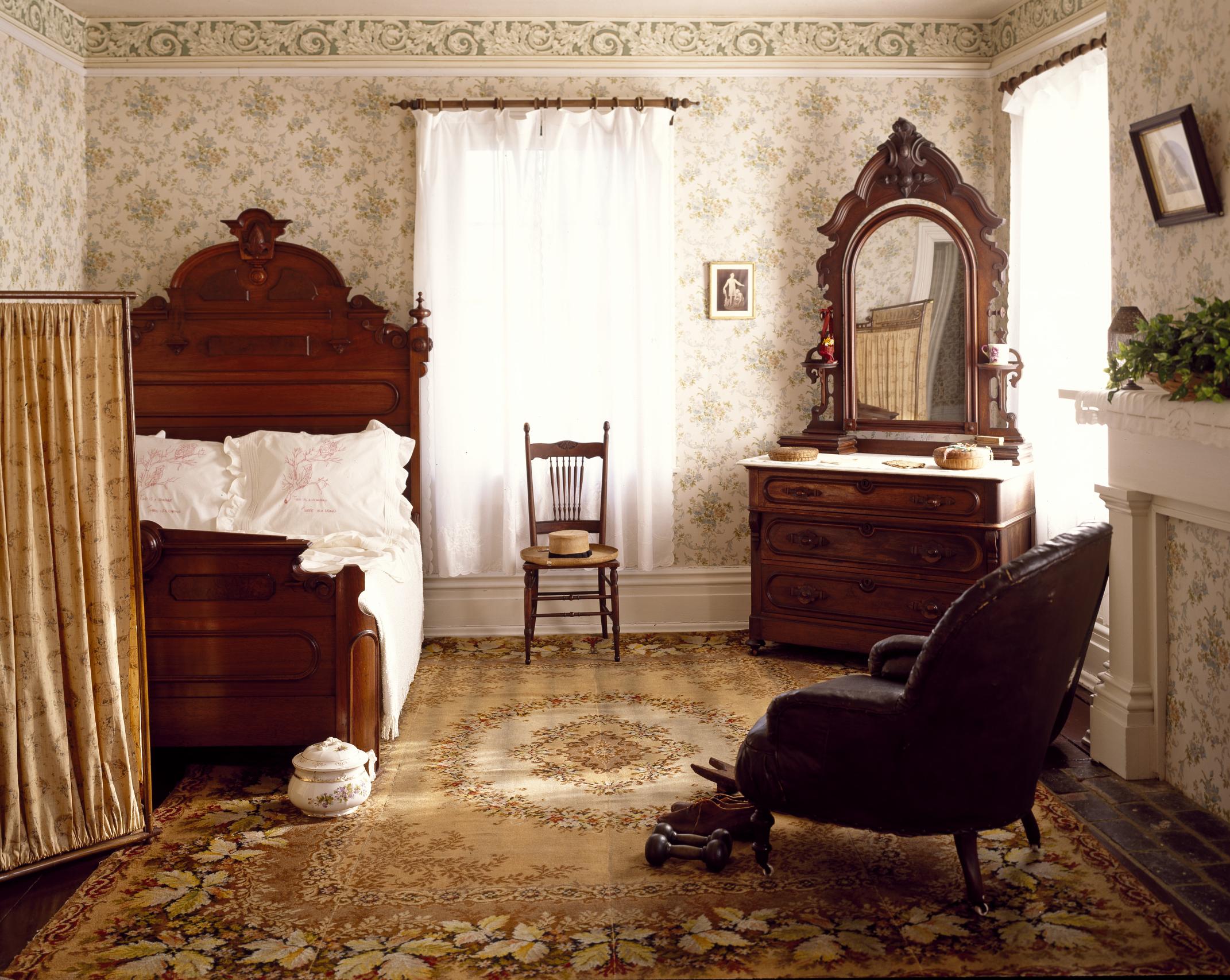
In 1877, Frederick Douglass bought the Cedar Hill estate — a house on roughly nine to ten acres on the hill above the new suburb — purchasing it from John Van Hook of the Union Land Association and breaking the whites-only restriction that had governed Uniontown.68 The next year he added about fifteen acres and enlarged the house from fourteen rooms to twenty-one.7 Douglass lived at Cedar Hill until his death on February 20, 1895.9 The home is preserved today as the Frederick Douglass National Historic Site: the National Park Service took its deed in 1962, and it was designated a National Historic Site on February 12, 1988.10
Barry Farm and the Freedmen's Bureau
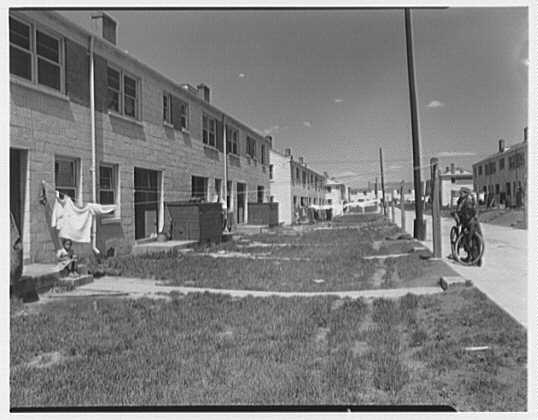
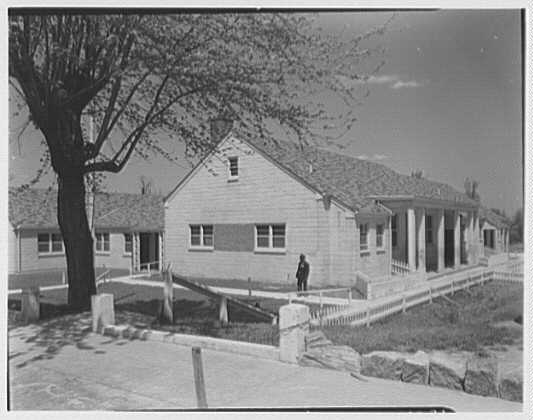
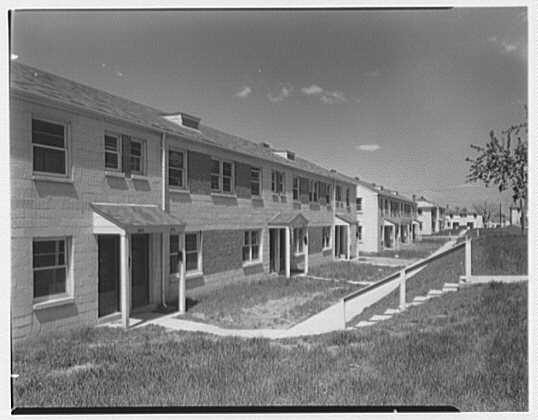
Black Anacostia took root just to the south. In 1867 the Freedmen's Bureau bought the roughly 375-acre Barry farm and subdivided it into one-acre plots sold to formerly enslaved and free-born African Americans, creating the Barry Farm community.11 The effort grew out of General Oliver O. Howard's push to help Black families become landowners, with buyers paying off their plots over a period of years.12 In 1871 residents of the western part renamed their section Hillsdale.13 Generations later, the National Capital Housing Authority built the 442-unit Barry Farm Dwellings public housing project on part of the land in 1943; those buildings were demolished in 2018–2019 under a redevelopment plan the city had approved in 2006.1415
St. Elizabeths
On the heights above the neighborhood stands St. Elizabeths Hospital, which opened in 1855 as the Government Hospital for the Insane — the first federally operated psychiatric hospital in the United States.16 The campus is split by Martin Luther King Jr. Avenue (historically called Nichols Avenue) into a federally owned West Campus and a District-owned East Campus, and was designated a National Historic Landmark in 1990.1729 The West Campus has been redeveloped as the headquarters of the U.S. Department of Homeland Security, a project announced in 2007.18
A community institution
In 1967 the Smithsonian opened the Anacostia Neighborhood Museum in the heart of the neighborhood — under director John Kinard, it opened on September 15, 1967, and is widely regarded as the first federally funded community museum in the country.21 The neighborhood's nineteenth- and early-twentieth-century streetscape was recognized in 1978, when the Anacostia Historic District was listed on the National Register of Historic Places.22 The district takes in roughly 550 buildings across about twenty squares, built between 1854 and 1930.23
The river, bridges, and today
The river that gave the neighborhood its name also shaped its modern story. The South Capitol Street Bridge opened in 1950 and was renamed the Frederick Douglass Memorial Bridge in 1965; a new arch bridge of the same name opened on September 6, 2021.2425 For decades the Anacostia River was among the city's most polluted waterways, fouled by a combined sewer system that overflowed during storms.26 A long cleanup followed: DC Water's Clean Rivers tunnel project opened its first segment in 2018, aiming to cut sewage overflows by roughly 98 percent.27
Today Anacostia anchors a growing arts scene — the Honfleur Gallery opened on Good Hope Road in 2007, and the Anacostia Arts Center has operated since 2013 — alongside new commercial development and the ongoing redevelopment of St. Elizabeths and Barry Farm.28
(One common mix-up worth clearing: Joint Base Anacostia–Bolling, the military installation formed in 2010 from Bolling Field and the former Naval Air Station Anacostia, sits on the Potomac side and is separate from the residential neighborhood.30)
Every specific date, name, and figure above is sourced to the references below and on the resources page. Found an error? The point of this project is to get the history right — please tell us.
-
WETA Boundary Stones — "What's in a Name? Anacostia." https://boundarystones.weta.org/2021/01/11/whats-name-anacostia ↩
-
WETA Boundary Stones — "What's in a Name? Anacostia." https://boundarystones.weta.org/2021/01/11/whats-name-anacostia ↩
-
Cultural Tourism DC marker, "Uniontown, DC's First Suburb." https://www.hmdb.org/m.asp?m=95972 ↩
-
Cultural Tourism DC marker, "Uniontown, DC's First Suburb." https://www.hmdb.org/m.asp?m=95972 ↩
-
DC Historic Sites (DC Preservation League) — Anacostia Historic District. https://historicsites.dcpreservation.org/items/show/18 ↩
-
National Park Service — Cedar Hill: Frederick Douglass's Rustic Sanctuary. https://www.nps.gov/articles/cedar-hill-frederick-douglass-rustic-sanctuary.htm ↩
-
Frederick Douglass National Historic Site. https://en.wikipedia.org/wiki/Frederick_Douglass_National_Historic_Site ↩
-
DC Historic Sites (DC Preservation League) — Anacostia Historic District. https://historicsites.dcpreservation.org/items/show/18 ↩
-
National Park Service — Cedar Hill. https://www.nps.gov/articles/cedar-hill-frederick-douglass-rustic-sanctuary.htm ↩
-
Frederick Douglass National Historic Site (National Park Service). https://www.nps.gov/frdo/index.htm ↩
-
D.C. Policy Center — The history and evolution of Anacostia's Barry Farm. https://www.dcpolicycenter.org/publications/barry-farm-anacostia-history/ ↩
-
D.C. Policy Center — Barry Farm. https://www.dcpolicycenter.org/publications/barry-farm-anacostia-history/ ↩
-
Historical Marker Database — "Barry Farm – Hillsdale." https://www.hmdb.org/m.asp?m=113607 ↩
-
Barry Farm. https://en.wikipedia.org/wiki/Barry_Farm ↩
-
Barry Farm. https://en.wikipedia.org/wiki/Barry_Farm ↩
-
St. Elizabeths Hospital. https://en.wikipedia.org/wiki/St._Elizabeths_Hospital ↩
-
St. Elizabeths Hospital. https://en.wikipedia.org/wiki/St._Elizabeths_Hospital ↩
-
U.S. General Services Administration — St. Elizabeths West Campus. https://www.gsa.gov/real-estate/ongoing-construction-projects/st-elizabeths-west-campus ↩
-
SAH Archipedia — Southeast of the Anacostia River. https://sah-archipedia.org/essays/DC-01-0010 ↩
-
SAH Archipedia — Southeast of the Anacostia River. https://sah-archipedia.org/essays/DC-01-0010 ↩
-
Anacostia Community Museum (Smithsonian). https://anacostia.si.edu/about-us ↩
-
DC Historic Sites (DC Preservation League) — Anacostia Historic District. https://historicsites.dcpreservation.org/items/show/18 ↩
-
Anacostia Historic District. https://en.wikipedia.org/wiki/Anacostia_Historic_District ↩
-
Frederick Douglass Memorial Bridge. https://en.wikipedia.org/wiki/Frederick_Douglass_Memorial_Bridge ↩
-
Frederick Douglass Memorial Bridge. https://en.wikipedia.org/wiki/Frederick_Douglass_Memorial_Bridge ↩
-
NPR — "The Consequences Of Cleaning Up The Anacostia River" (2018). https://www.npr.org/2018/05/05/608723599/the-consequences-of-cleaning-up-the-anacostia-river ↩
-
Anacostia River. https://en.wikipedia.org/wiki/Anacostia_River ↩
-
Anacostia Arts Center. https://anacostiaartscenter.com/ ↩
-
D.C. Policy Center — Barry Farm / Nichols Avenue. https://www.dcpolicycenter.org/publications/barry-farm-anacostia-history/ ↩
-
Joint Base Anacostia–Bolling. https://en.wikipedia.org/wiki/Joint_Base_Anacostia%E2%80%93Bolling ↩
![Anacostia Bank, [Washington, D.C.]](/static/images/anacostia-bank-washington-d-c.jpg)